Rethinking weight loss
Explore the beliefs behind restriction, control, and self-blame.
The standalone online course
Change your relationship with food, your body, and yourself through psychological understanding and guided practice. Work through 12 modules at your own pace, applying what you learn to everyday life.
What you’ll explore
You may have tried diets, food rules, or intuitive eating and still feel caught between control and feeling out of control.
The course connects food and body image with the psychological patterns behind them. Four connected areas guide the teaching and practice.
Explore the beliefs behind restriction, control, and self-blame.
Reconnect with hunger and fullness, nourishment, movement, and body image.
Work with stress, emotions, perfectionism, and familiar identity patterns.
Bring what you learn into relationships, boundaries, self-trust, and everyday choices.
What’s included
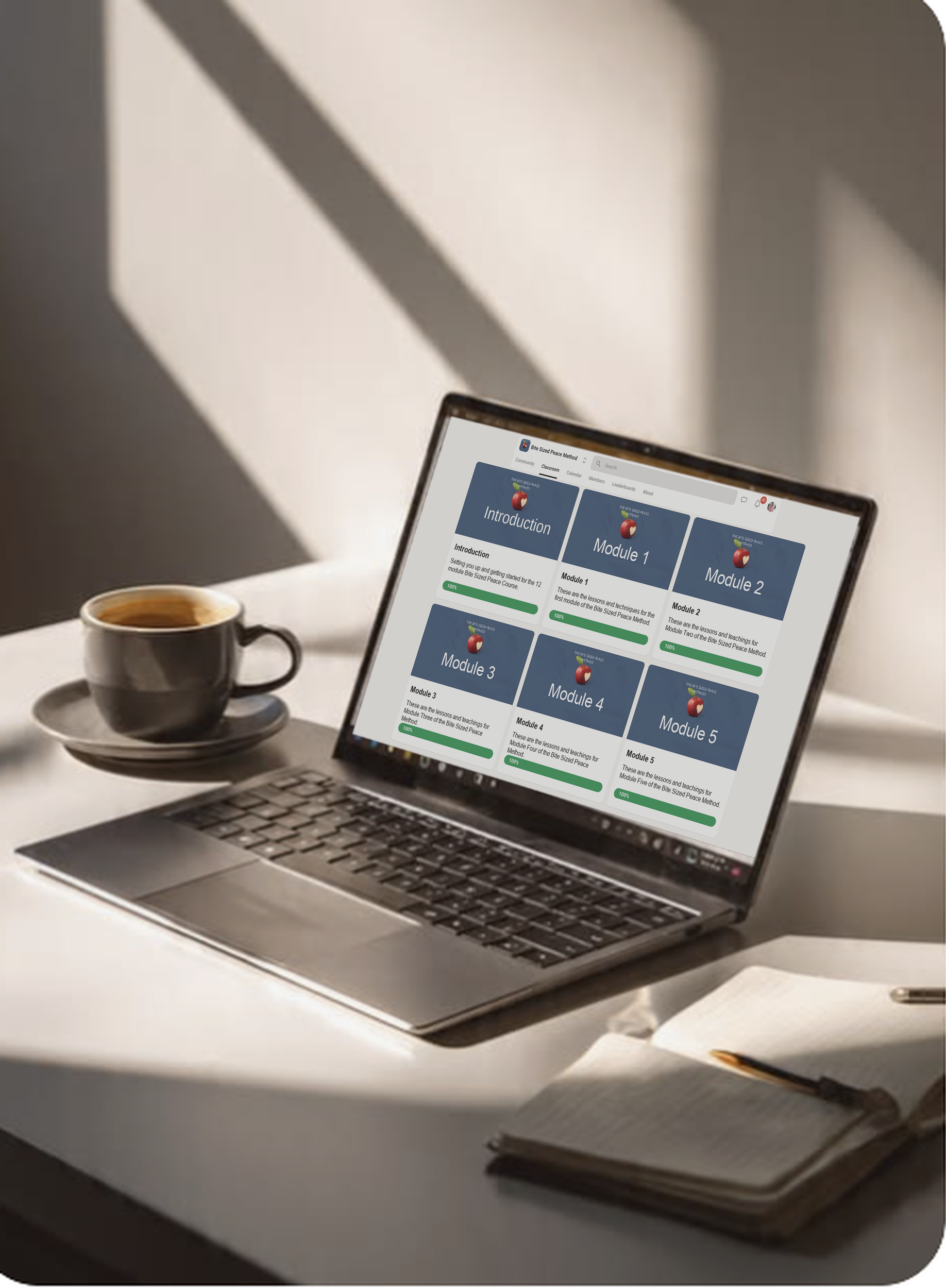
12 pre-recorded modules on Skool, with additional masterclasses to explore key areas in more depth.
Step-by-step meditation, themed gratitude practices, worksheets, and exercises to use between lessons.
A digital copy of Bite Sized Peace and a community board for questions, reflections, and discussion.
The sequence moves from understanding familiar patterns to working with hunger, fullness, body image, and everyday situations. Open a module to read more.
Understand the cycle of restriction and revisit what previous attempts have taught you. Begin the gratitude and meditation practices that develop throughout the course.
Identify the stories and assumptions that influence your eating, body image, and sense of control. Start noticing when those beliefs shape your choices.
Reconnect with physical hunger cues and begin learning how to recognise what your body is asking for.
Deepen your awareness of hunger signals and explore the confusion that can arise around when and how to eat.
Explore both foods you want to eat and foods that nourish you. Work with permission, restriction, enjoyment, and care as parts of the same relationship.
Practise being present with food. Learn how to pay attention to the experience of eating without turning mindfulness into another rule to follow.
Recognise fullness cues and explore how to respond to them while loosening rigid control and familiar food rules.
Use practical exercises and tasks to work with body criticism and develop a more respectful relationship with your body.
Apply the framework to meals out, birthday parties, holidays, and changing routines. Explore how to make it useful when life is unpredictable.
Look at how your relationship with food connects with wider emotional and life patterns, and where the same habits appear elsewhere.
Consider how you want to live, feel, and show up beyond food. Connect what you have learned with your priorities and choices.
Prepare for setbacks, recognise what to expect after the course, and build a plan for continuing independently.
Participant experiences
These excerpts were shared by participants in the previous supported programme.
Less guilt around food
“I didn't feel guilty about leaving food on the plate because I stopped when I was full.”
Feeling comfortable in my body
“What I am so proud of & happy about is that I am actually feeling comfortable with my body!”
More choice, even on holiday
“I ate one and there was a second one but I felt I would just have been having it because it was there, so I saved it and brought it back with me.”
Being present with friends
“Meeting up with friends was so good. Nobody cared what we all looked like it was genuine love we had for one another.”
Learning in your own time
The course can be taken independently. It can also be bundled with 1:1 work with me, bringing the structured lessons together with conversations focused on your own experience.
Ask about getting startedNo. The practices are taught step by step, with instructions on what to do and what to expect. They develop as you progress through the course.
You work through the pre-recorded modules and practices on Skool at your own pace. Use the community board to ask questions and share reflections.
The standalone course does not include group meetings or private sessions. If you would like to combine it with 1:1 work, we can discuss that separately.
The course develops themes from Bite Sized Peace through a structured sequence of video teaching, meditation, themed practices, worksheets, and integration exercises. It guides you through applying the ideas over time.